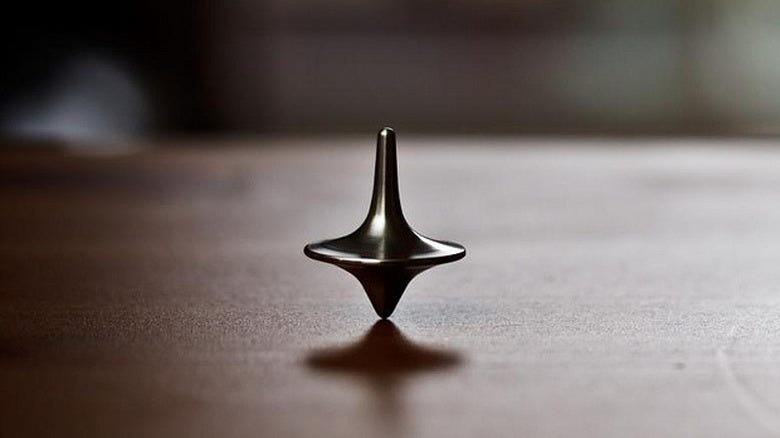
In Inception, Leonardo DiCaprio spins his totem — a small metal top — to test whether he’s dreaming.
If it spins forever, he’s trapped in an illusion.
If it wobbles and falls, he’s awake.
That moment lasts only a few seconds, but it captures one of the most profound ideas in physics and engineering: stability through energy loss.
In the dream world, the top never slows down — there’s no friction, no air drag, no decay.
It spins eternally because the dream has no mechanism for losing energy.
In the real world, the top starts to wobble, then falls — proof that energy is leaking out, and that reality is, in fact, stable.
Imagine every system — a pendulum, a car, a spinning top — sitting in an invisible energy landscape.
At the bottom is equilibrium; at the sides, instability.
When disturbed, the system “climbs uphill,” gaining energy.
But if energy always flows downhill again, it will return to rest.
That’s Lyapunov stability in motion.
Mathematically:
That’s all it takes for the system to be stable — energy must always decrease.

Every stable system leaks energy — that’s not a flaw; it’s how the world stays balanced.
Each of these has V(x)>0 and V˙(x)<0.
When energy keeps flowing out, equilibrium becomes inevitable.
Everything stable is slowly, gracefully falling back to balance
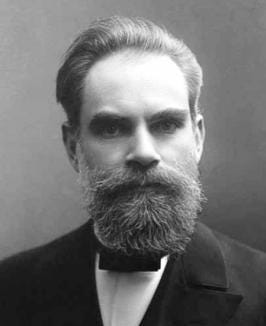
In the 1890s, Russian mathematician Aleksandr Lyapunov proved that stability doesn’t require solving every equation.
All you need is a single number that behaves like energy — V(x).
If V(x) always decreases, the system must calm down.
No matter how chaotic it looks, it’s guaranteed to return to rest.
That’s the Lyapunov stability criterion — the mathematics of peace.
In plain words,
“If a system keeps losing energy, it will always find its balance.”
That’s what every wobble means — not failure, but a return to stability.
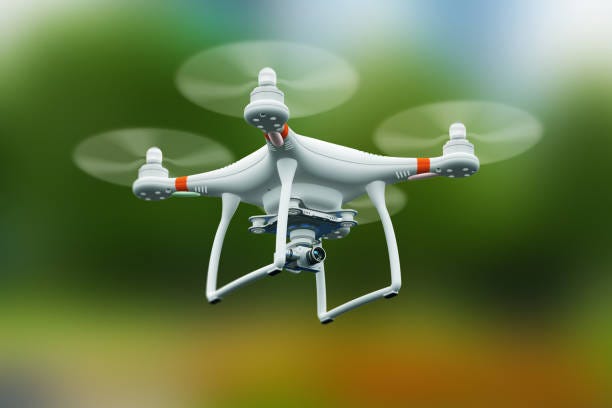
A drone hovering in the wind stays upright not by freezing in place but by constantly adjusting, losing a little energy each time.
Every gust adds disturbance — a spike in its energy function V(x).
The controller immediately compensates, ensuring V˙(x)<0 again.
Energy drains, the drone settles. Without those small leaks, it would drift, spin, and collapse.
But the same story unfolds in something far older — you.
When humans walk, we’re never in perfect balance.
Each step begins with a controlled fall — your center of mass tips forward, converting potential energy into motion. Muscles and tendons then absorb and release that energy, ensuring the next step doesn’t topple you. If your body’s internal “controller” stopped dissipating energy — if V˙(x) ever became positive — you’d stumble instantly.
Human gait is nature’s masterpiece of stability:
Every stride is a self-correcting oscillation that repeats, not by resisting motion, but by taming it. Like a drone, the nervous system enforces a Lyapunov rule — always moving toward lower energy, step by step.
And modern robotics borrows directly from that principle.
Quadrupeds like Boston Dynamics’ Spot mimic this rhythm:
Each footfall slightly destabilizes the robot, then controllers drain that energy back to the center.
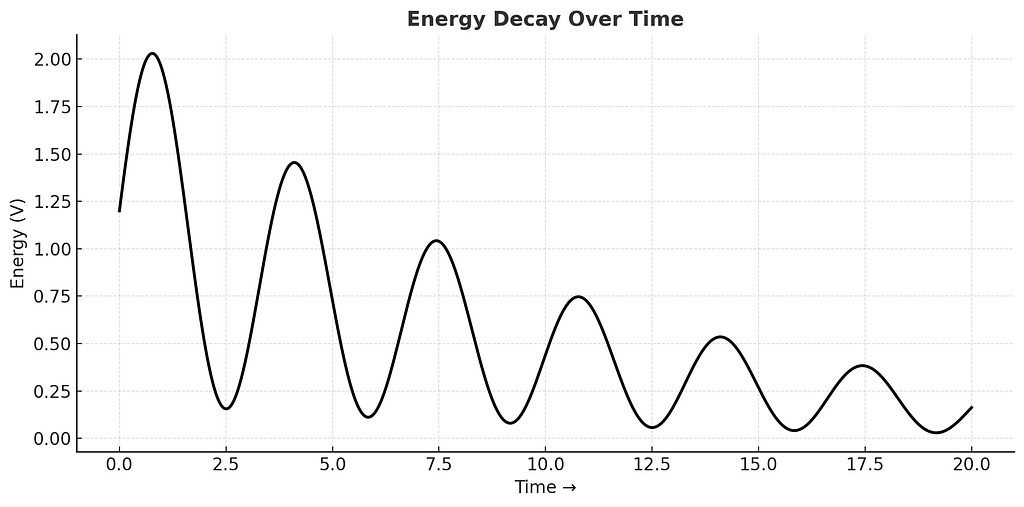
If you could watch stability over time, it wouldn’t look flat — it would move in soft waves.
Energy rises and falls, again and again, but a little less each time.
The system never spins out of control; it stays close to balance.
That’s what we call stability — like a swing that keeps moving after a push but never flips over.
Now imagine the swing slowing down all by itself, each motion smaller than the last, until it finally stops.
That’s asymptotic stability — when something doesn’t just stay near balance but returns to it naturally.
“If the energy keeps decreasing until it reaches zero, we call it asymptotic stability.”
When you walk, your body works the same way.
Each step begins as a tiny fall forward — energy goes up —
Then your legs catch you and bring you back — energy goes down.
You keep moving, but never lose control.
Robots and drones follow the same rule.
Their controllers track how far they are from balance and make constant adjustments to reduce that “energy” over time.
If it always shrinks, the system stays upright and steady.
“Stability means staying near balance.
Asymptotic stability means finding your way back to it — every time.”
Lyapunov showed that the secret to stability isn’t resistance — it’s release.
A system stays balanced not by locking itself in place, but by allowing energy to flow out until motion softens and calm returns.
The same principle shapes everything around us.
Drones hovering, humans walking, planets orbiting — all remain stable because they keep giving energy back to their surroundings.
Even our own thoughts and emotions follow this pattern: tension rises, then fades, and balance returns.
In a perfect world without loss, nothing could rest — not a pendulum, not a planet, not a person.
Reality works precisely because it isn’t perfect.
It wobbles, leaks, and lets go.
“Next time you push a swing or roll a ball, notice how every real-world motion slows. That loss of energy is Lyapunov’s signature everywhere.”