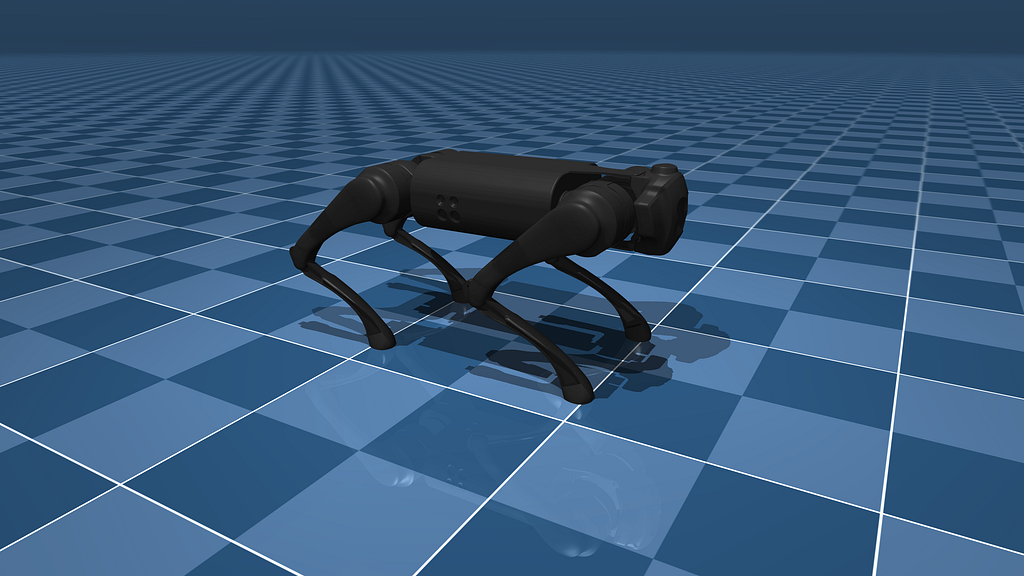
I went into my thesis thinking it would be like an action movie — building controllers, running simulations, and making the robot walk.
Something like Iron Man.
But somewhere along the way, it turned into something else.
It felt less like Iron Man… and more like Tenet — full of confusion, and not even knowing what problem I was trying to solve.
I thought the hardest part of my thesis would be building the solution.
I was wrong.
The hardest part was defining the problem itself.
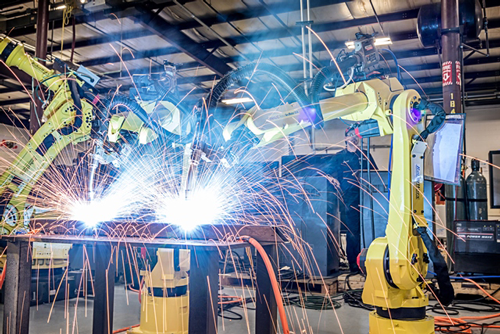
I started with what felt like an exciting idea: mounting a power tool to a quadruped robot and enabling it to interact with the environment. Cutting, grinding, or performing high-frequency contact tasks while staying balanced.
A power tool doesn’t just touch the surface — it vibrates.
It injects forces back into the system, creating continuous disturbances.
Suddenly, the problem wasn’t just locomotion.
It was about maintaining contact under rapid force fluctuations while coordinating motion
At first, that felt exciting. It felt like I had found something meaningful. But I had not found a problem yet.
I had only found a direction.

Then came the literature review.
I expected it to narrow my thinking.
Instead, it multiplied it.
One paper pushed me toward disturbance rejection.
Another toward force control.
Another approach to contact modelling.
Another toward whole-body stability.
Every paper had a focused idea.
Mine wasn’t.
Every time I tried to define the problem, it expanded.
If I considered tool vibration, I had to think about force estimation.
If I considered force estimation, I had to think about contact modelling.
Each layer uncovered another layer.
And then it hit me:
I wasn’t struggling to solve the problem.
I was struggling to contain it
So I stepped back.
Instead of asking, What is the coolest thing this robot could do?
I started asking, What is the smallest meaningful version of this problem that I can actually solve?
That question changed everything.
Because once I stopped chasing the most complete version of the vision, I could finally see its core.
If I remove the tool, what remains?
If I remove the vibration, what remains?
If I strip away the most dramatic part of the setup, what is still essential?
What remains is something more fundamental:
A robot maintaining continuous contact with the environment while moving.
That was the shift.
I realised the real heart of the problem was not the tool itself, but sustained contact — not isolated touches, but meaningful interaction with the world while the robot is still locomoting.
That reframing made the problem smaller, but much clearer.
And clarity mattered more than scale.
This is what led me to continuous sliding contact.
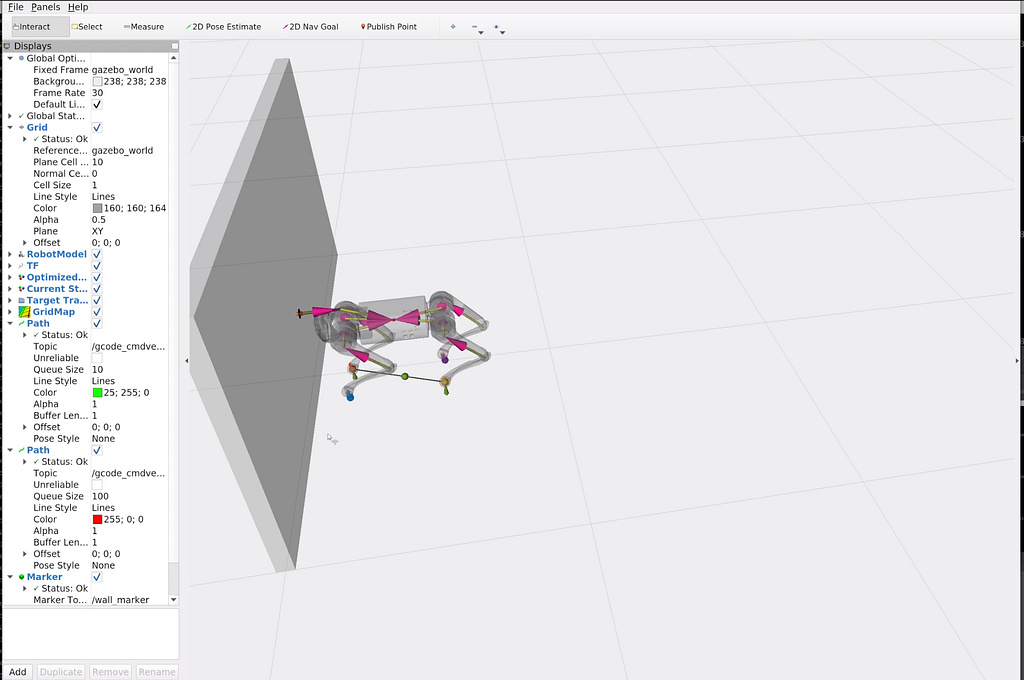
Sure, it wasn’t the original vision, but it was the first version of the problem that truly made sense.
It preserved the spirit of the original idea without all of its complexity.
Now the questions became sharper:
It was clearer.
What I learned (The Hard Way)
A cool idea is not a research problem.
If everything matters, nothing is defined.
Start smaller than you think — you can always scale up.
Define what you will not do.
In the end, my thesis doesn’t feel like a clean, solved story.
It feels unfinished, evolving — more like Blade Runner 2049 than a traditional narrative.
But now, at least, I know what I’m looking for.
And in research, that might be the most important thing of all.